S6 Ep19 Dr. Derek Donegan on Orthopedic Trauma & Metacognition
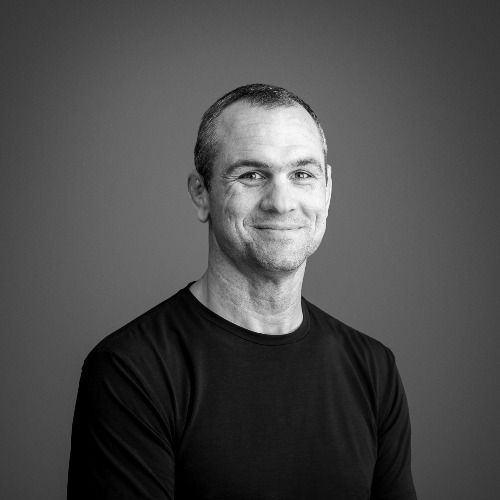
Dr. Derek Donegan is an orthopedic trauma surgeon and Associate Professor at the University of Pennsylvania, a healthcare entrepreneur, co-founder of ORtelligence, and a national leader with the Orthopedic Trauma Association, where his work centers on well-being, moral injury, and advocacy.
Dan and Derek start with the distinction that elective joint replacement is planned, optimized, and predictable weeks out, while orthopedic trauma is a patient you've never met and can't prepare for. The two paths have the same training pipeline, same residency spots, but somewhere along the way some surgeons catch the "trauma bug" and start looking for chaos to organize instead of variables to eliminate.
From there they dig into what Derek calls his "Spidey sense", the signal that a case is turning before he could point to why, and his reputation for going quiet in the OR exactly when things get hardest. They use cognitive load theory to get at why that instinct resists being taught even when everyone in the room wants it taught.
This conversation was released in partnership with The Emergency Mind Podcast.
If you found value in this discussion, the best way to support our work and stay up to date on future episodes is to subscribe and leave us a quick rating or review. It helps us reach more people who need to hear these conversations.
Transcript
Welcome to the Teamcast.
2
:I'm Dr.
3
:Preston Cline, director of the
Mission Critical Team Institute.
4
:Here, we discuss all things
mission-critical teams.
5
:These are teams of four to twelve people
indigenously trained and educated to
6
:solve rapidly emerging, complex, adaptive
problem sets where the consequence of
7
:failure is death or catastrophic loss.
8
:With my colleagues and our guests,
we bring you insights from combat
9
:zones to emergency rooms, dedicated to
improving the success, survivability,
10
:and sustainability of these teams.
11
:We grapple with how to prepare for
future events and how to develop
12
:language and frameworks to transfer
critical, often unspoken, knowledge.
13
:Whether you're on a mission-critical
team or not, we aim to bring you
14
:the broadest range of topics and
guests as possible to help prepare
15
:you to perform when it matters most.
16
:Thank you for joining us, and
hope you enjoy the Teamcast.
17
:Dan: Hi, folks.
18
:I'm Dan
19
:Dworkis.
20
:I'm
21
:delighted to have Derek Donegan
on the podcast with us today.
22
:Dr.
23
:Donegan is an orthopedic trauma surgeon.
24
:He's the associate professor at
the University of Pennsylvania,
25
:and he's a healthcare entrepreneur
focused on advancing surgical care,
26
:technology, and physician well-being.
27
:He's a co-founder of ORtelligence and
serves in the national leadership with
28
:the Orthopedic Trauma Association,
where his work centers on well-being,
29
:moral injury, and advocacy.
30
:And if you're watching me read that off
the side of the screen, that's just 'cause
31
:I wanna get all of that exactly right.
32
:Most importantly, I think Derek
is a, a brilliant leader and a
33
:clinician and somebody I'm proud
and happy to call a friend and
34
:happy to have him on the podcast.
35
:So Derek, welcome.
36
:Derek: Thanks, Dan.
37
:It's a pleasure to, to be here,
and it's humbling when you hear
38
:somebody read that, so thank you.
39
:Dan: Yeah, absolutely.
40
:We've had, over the years, a ton
of super interesting conversations.
41
:We've done some projects together.
42
:We're in the middle of
doing some projects.
43
:There's a, a lot of really interesting
ground to go over for this.
44
:Why don't we start, if folks haven't
met you and they don't know you, can
45
:you give us like a 30,000-foot view
or the metric system, if you prefer,
46
:of what you do and who you are?
47
:Derek: Sure.
48
:As Dan said, my name's Derek Donegan.
49
:I am a practicing orthopedic trauma
surgeon at a fairly busy level one
50
:academic trauma center in Philadelphia
at the University of Pennsylvania.
51
:I've been in practice, I think
I'm just starting my 15th year or
52
:so as a, as an attending surgeon.
53
:That role is, r- very vast,
um, a couple different hats.
54
:Number one, obviously, is clinical care,
taking care of poly-traumatized and
55
:trauma patients that come in through ER,
the trauma bay, who injure themselves
56
:and come in through our clinic.
57
:In addition, because it's an academic
center, we get to do research and
58
:study things that can hopefully advance
our field and make things better for
59
:our patients and for other providers.
60
:And lastly is I get to educate.
61
:I get to educate medical
students, residents, and fellows.
62
:And so when you think about the ability
to have impacts on the systems and people,
63
:this starts to really broaden the ability
to touch people in many different ways.
64
:In addition, I'm happily married for
20 years and a proud father of four
65
:incredible daughters that keep me very
busy outside of when I'm not working
66
:as an orthopedic trauma surgeon.
67
:Dan: And then as Dan also mentioned,
68
:Derek: I have a passion for the
entrepreneurial spirit to bring kind
69
:of more visionary things into the
healthcare space to really just to make
70
:our jobs a little bit better and to
provide better care for our patients.
71
:Dan: Love it, man.
72
:I love it.
73
:There's-- I'm thinking back of all of
the conversations we've shared over the
74
:years, and they usually involve stealing
5 or 10 minutes in between things,
75
:which is no surprise given the list
of the depth of what you, what you do.
76
:I, I think it's worth starting
With what is ortho trauma?
77
:And I think that's worth it because I'm
not sure the breakdown is the same in
78
:other places, and it's worth defining
what it is 'cause I think it's gonna
79
:be one of the themes we poke at is
what does it take to be a good ortho
80
:trauma person and how do we build that
and what does a system look like that?
81
:So what is orth-
82
:Derek: Yeah, that's a great question
actually, 'cause I think people
83
:don't necessarily understand the
different types of orthopedics
84
:that can be practiced, if you will.
85
:So orthopedics in general i-
is basically being a surgeon
86
:of the musculoskeletal system.
87
:And, uh, most people think of that
as doing hip and knee replacements,
88
:reconstructing ACLs on athletes, taking
care of some, you know, wrist fractures,
89
:carpal tunnel releases, et cetera.
90
:But when you start to dial into
orthopedics, there are multiple
91
:specialties where people take an
extra year of training to really
92
:hone their skills in a specific area.
93
:One of those areas is orthopedic
traumatology, which I developed a
94
:passion for and chose to pursue in
a little bit of a deeper dive And
95
:what that really is taking care
of the acutely injured individual
96
:from a musculoskeletal perspective.
97
:Most commonly broken bones, whether
it's a femur fracture or a tibia
98
:fracture or a wrist fracture or a
forearm or humerus or pelvis or an
99
:acetabulum, those type of injuries.
100
:But what kind of separates the orthopedic
trauma surgeon is when that all happens in
101
:a very high energy mechanism in a patient
who potentially could be in extremis
102
:when they come into the hospital, for
lack of a better term, on death's door.
103
:And part of the reason is because of these
musculoskeletal injuries that they have.
104
:And so you, we spend a year of
really focusing on how to manage
105
:that person as a whole, how to manage
their injuries, and how to start
106
:to put those people back together.
107
:Dan: So there's a couple threads
that I wanna pull on here, and
108
:maybe let's do it this way.
109
:Can you describe the difference between
the setup for and maybe execution of
110
:what somebody would do if they're, say,
replacing a knee in an elective surgery
111
:versus if they're doing a femur repair
on somebody that was hit by a car?
112
:Derek: Sure.
113
:I think-- and that's a,
a really nice contrast.
114
:Technically, doing hip and knee
replacements is, can be very
115
:technically challenged, and our
surgeons that spend time become
116
:experts for that are truly gifted.
117
:But when you look at doing a, an
elective total hip or total knee
118
:replacement, it's planned, right?
119
:You meet the patient in the office,
you diagnose them with, say, knee
120
:arthritis, and they've failed conservative
treatment, and the decision is to
121
:proceed with surgical intervention in
the form of a total knee replacement.
122
:That person is then booked for
surgery, usually four to six
123
:weeks out, maybe even longer.
124
:And in that time period, that
patient is able to become
125
:medically optimized as well.
126
:They can see their medical doctors,
they get cardiology clearance, make
127
:sure their blood sugar's under control.
128
:If there's any habits that might
negatively affect outcomes like smoking,
129
:things of that nature, can start to
work on reversing or quitting those.
130
:And then, and then their
surgery date comes.
131
:And from a sur-surgeon's perspective,
if I'm doing hip and knee replacements
132
:all day, my schedule is patient
A, total knee, patient B, total
133
:hip, left versus patient C…
134
:And it's very predictable and scheduled.
135
:And then the case itself tends to
follow pretty specific steps with
136
:similar, if not the same equipment
most times, in a very stepwise fashion.
137
:And so those-- the people who do
that can-- are true wizards of
138
:their craft and can become extremely
efficient at that surgery and really
139
:optimize outcomes for their patients.
140
:On the flip side- Orthopedic trauma.
141
:Now, there are some elective cases
we get to do when trauma goes
142
:sideways, when bones don't heal
correctly, things of that nature.
143
:But in the acute setting, the person with,
say, the femur fracture who crashes his
144
:motorcycle, they come into the emergency
room or the trauma bay, and they could
145
:potentially have other injuries going on.
146
:But from a, a, a orthopedic surgery
perspective, that patient, you know, is
147
:added onto the OR schedule either that
day or the next day, and taken to the
148
:operating room by an orthopedic surgeon
or traumatologist to fix their femur.
149
:Now, an orthopedic trauma surgeon,
if it's just that one femur that
150
:came in, that's all they're doing,
but that tends not to be the case.
151
:Where- … my day is often fixing a femur
fracture, fixing a tibia fracture, fixing
152
:a proximal humerus fracture, fixing a
pelvis, maybe doing a, a conversion total
153
:hip for a failed acetabular fracture.
154
:So my orthopedic trauma surgeon's day
is fairly unpredictable, and I would
155
:say one of the things I personally
like about it, and I guess this
156
:will get to my personality, is I
can go to bed, have two cases on the
157
:schedule, and wake up and have 10.
158
:And you just have to be able to
roll with that, think on your toes a
159
:little bit, and be okay with planning.
160
:You're gonna plan and prepare,
but with limited time to do so.
161
:Dan: So when we go back to the, the
joints person, we're thinking about--
162
:I love how much you used the word
optimize around that, and I think
163
:there's this whole concept of like in
the OR, you're optimizing technique,
164
:you're optimizing kits, you're getting
really familiar with what you're doing.
165
:Your team's getting used to it.
166
:You're getting a, a battle
rhythm of that same thing down.
167
:And then even outside of the OR, you're
really optimizing the environment, both
168
:of scheduling and getting the person in
there, but also of the human being, right?
169
:You have time to work to make the
field better to play with, right?
170
:To make the human better to work with.
171
:Versus In your life where you
get the hand of cards that you
172
:get, so does the patient, right?
173
:Nobody necessarily wants
to be there, right?
174
:But you all get the hand of cards you're
dealt, and then you have to figure
175
:out how to play it with what you have.
176
:And over the years that you and I have
known each other, I've been endlessly
177
:fascinated by the training pipeline
that in some ways produces both of those
178
:people from the same training pathway.
179
:Now, obviously, there
are differences, right?
180
:There's fellowship, and you do a
fellowship in trauma or you do a
181
:fellowship in joints or sort of whatever.
182
:But at the end of the day, most
of the training pipeline is all
183
:of the orthopedic folks together
versus, say, the OBGYN folks or the
184
:pediatrics folks or me in the ER.
185
:And there's some pathway that takes
people that love surgery, they
186
:love the musculoskeletal system,
and they want to be in this space.
187
:And you train them how to think
through these problem sets, and
188
:then they decide somewhere in
there, "Uh, I really like unordered,
189
:unstructured, chaotic problem sets.
190
:I wanna wake up and have 10 things
and not know what they are, and
191
:wanna work on somebody that's not
optimized, wanna be in the, the
192
:mess of it," versus, "You know what?
193
:I actually want to be the world's best
at performing, like, left ACL repairs,
194
:and I wanna be, like, so good at that,
that I wanna control all the variables
195
:and make optimal really within my grasp."
196
:And how does that work, right?
197
:Like, how do you produce
one pipeline that…
198
:Are you bringing both of those people
in pre-formed, and then they know
199
:from the time they hit the door
that they're gonna go left or right?
200
:Or are you seeing people that all come
in, and then somewhere along the way
201
:they catch a spark and they're like,
"Ah, I really wanna go this way"?
202
:'Cause I think there's an underlying
question there about, in general, how
203
:do you train people to work in the
types of environments that you work
204
:in where y- you have to love some
of that chaos to really get it done?
205
:Derek: Yeah.
206
:So I think you hit the nail on the head.
207
:The, the training pipeline
is pretty similar, right?
208
:Graduate college, you
get into medical school.
209
:At some point in medical school, you
decide that orthopedic surgery or
210
:whatever specialty is the specialty
you wanna go into, and then you
211
:apply for that residency, right?
212
:So whether it's an emergency medicine
residency, internal medicine,
213
:orthopedic surgery, whatever.
214
:So there's a selection process
that goes into that, right?
215
:And so the people who say, "I wanna
be an orthopedic surgeon," they apply
216
:to orthopedic surgery residencies.
217
:I think the last time I looked at the
statistics, maybe about a year or two
218
:ago, it was something like, I think,
20%, 23% people matched into orthopedics.
219
:So to give you, uh, a real reference,
at University of Pennsylvania, we
220
:have eight residents per year for
five years, so there's eight spots.
221
:We tend to interview somewhere
around 80 people for those eight
222
:spots out of probably about 1,000
people who apply to our program.
223
:So that field becomes very
narrowed very quickly.
224
:So then we get these eight people
who have decided they wanna
225
:become orthopedic surgeons.
226
:Some come in with…
227
:And everyone has different reasons for it.
228
:Some have a family member who's
an orthopedic surgeon, some people
229
:underwent orthopedic surgery and nobody--
Some know someone who did, and they
230
:just instantly changed their lives.
231
:Some people just like working
with their hands and tools, right?
232
:And so it's pretty diverse.
233
:And some people come in and
say, "Hey, I wanna be the
234
:best left ACL surgeon," right?
235
:Some people come in and say, "I
have no idea what I wanna be.
236
:I just wanna be an orthopedic surgeon."
237
:And so I think there's both.
238
:You have people who come in and have a
very clear identity and identity path,
239
:and then you have people who come in,
are a little more open and a blank
240
:canvas, if you will, and they tend to
catch that spark of whatever that may be.
241
:And I think it's really important
can-- And sometimes it changes.
242
:I'll give you, for example, for
me, I was a collegiate wrestler,
243
:I was a phys ed teacher, I coached
wrestling all before going to medical
244
:school and making that decision.
245
:So in my mind, the most logical
thing for me to do was to be
246
:a sports medicine surgeon.
247
:Just made sense.
248
:And I caught the trauma bug when I
was at PGY2 and 3 with a couple of
249
:very specific experiences that I was
like, "Wow," like, "This, this is
250
:what I wanna do the rest of my life."
251
:It felt very rewarding
and very fulfilling.
252
:And so that can happen But I also-- it
can happen where someone says, "Hey,
253
:this fits my personality better."
254
:And I think that's also
a really important thing.
255
:It's something that we in the
academic environment try to, you know,
256
:coach/mentor, whatever word you wanna use.
257
:There's some nuance behind that.
258
:But be it an advisor saying, "Hey,
this is what this is really," and it
259
:becomes that immersive experience that
when you're on trauma for six weeks,
260
:like, you're doing nothing but trauma.
261
:You know what it's about, right?
262
:You get to understand what that
lifestyle is for a short period
263
:of time, and hopefully be able to
make a decision of I can do this
264
:for the rest of my life or not.
265
:Dan: And how does it work-- And I
will ask this, please feel free to
266
:decline answering this, but how does
it work at the department level?
267
:Because I, I have to imagine that
the personalities and problem-solving
268
:tools and ways of looking at the world
between different types of orthopedic
269
:surgeons who do or do not favor chaos
are probably a little different.
270
:And so collectively, you all still
have to run a department together,
271
:and you have to run a ship.
272
:So you have these people with very
different sort of mindsets, unlike,
273
:to some degree, say, an emergency
department, where basically everybody
274
:in an emergency department is emergency,
and we all, you know, for better or for
275
:worse, have some of the same personality
traits, and that can, that can really
276
:trip us sometimes or that can get us
all running in the same direction.
277
:But how does that work from
a systems point of view?
278
:Derek: That's a, that's
an interesting question.
279
:I'd have to say I think it just
works, and I think the reason why
280
:is because it takes all kinds for
the system to go around, right?
281
:I think we need the people who need-- who
are able to focus on doing a 10-hour spine
282
:surgery, and that's all they do, right?
283
:'Cause there's patients
out there that need that.
284
:Dan: Absolutely.
285
:Derek: We need the people who are
like, "Hey, listen, I just wanna
286
:do my total knees and total hips
because I can get that surgery done,
287
:and my outcome's gonna be the same.
288
:Like, I, I know what it's gonna be."
289
:And one of our surgeons
say, "Same is same," right?
290
:Same is same.
291
:I'm good.
292
:That's my lane.
293
:And then there's people like
me and my partners who are
294
:like, "Let's bring the chaos."
295
:Because we need chaos organizers, right?
296
:'Cause we're in a trauma center.
297
:Sure.
298
:And so I think it just works.
299
:Hats off to my chairman, Kyle
Potter, for the one who has
300
:to deal with all of us, right?
301
:And be our boss, in quotes, right?
302
:Because it's a lot of different
personalities and a lot of different egos
303
:and all sorts of things that you have to
get people rowing in the same direction.
304
:But it seems to work.
305
:Dan: Love it.
306
:Okay.
307
:L-let's-- We, we've been so far sort
of contrasting two different styles of
308
:orthopedic surgery, for lack of a better
word, two different directions of it.
309
:But let's zoom into yours for a minute.
310
:And you can't optimize the patient
before they get there 'cause you
311
:don't know when they're coming.
312
:You don't necessarily know
what's gonna be wrong with them.
313
:And so you're handed, and I know this
isn't quite literally, but you're
314
:handed a card, and the card says
you have to do this procedure on
315
:this person basically in this way.
316
:Derek: So
317
:Dan: what are the control
surfaces you have over that space?
318
:And we can-- the, the joints folks
can control all sorts of stuff.
319
:What are the control surfaces that you
have when you-- when all of a sudden you
320
:know you have to come in and do a thing?
321
:Derek: Yeah, I think it
depends on time of day, right?
322
:Mm-hmm.
323
:And so I think we tend-- we've been very
lucky to set up a system where we can get
324
:the majority of our work done during, I'll
call it, working daylight hours, right?
325
:Where our teams, our surrounding cast
of characters, our circulating nurses,
326
:scrub techs, anesthes-- x-ray techs
are, for the most part, similar, right?
327
:Not exactly the
328
:Dan: same every time,
329
:Derek: but same enough where- Mm-hmm
… we can rely on some consistency there to
330
:know that, okay, if we're taking care of
somebody's femur fracture, we're gonna
331
:put a, an intramedullary nail in it that
they know how we like to set up the room.
332
:They know what instruments
that we're gonna use.
333
:Our scrub tech has some familiarity with
the instrument sets that we're gonna use.
334
:Our anesthesia team knows that
patient needs a paralytics on board
335
:for us to overcome the forces of the
thigh muscles to get our reduction.
336
:And so those are, I think, the
things that are in our control.
337
:We have no control over the fracture
type, whether it's complex, simple,
338
:open, patient type, as you alluded to.
339
:They could be morbidly obese.
340
:They could have substances
on board and all sorts of
341
:things, not an optimized host.
342
:So I think optimizing the process
as best you can with the people
343
:around you allows you to have an
efficient, optimized surgical process
344
:that, regardless of the cards you're
dealt, is gonna set your-yourself
345
:up for success as much as possible.
346
:Dan: For all of us in medicine,
when we join a team, we modify the
347
:environment around us, but we also
inherit from that environment, right?
348
:Almost none of us design a
new system from the ground up.
349
:But i-if I could give you a magic
wand for a minute, and y- you got to
350
:completely remake a hospital, all of a
sudden, here's your brand new hospital.
351
:It's gonna have the same sort
of input of patients and inflow
352
:of stuff as you do right now.
353
:What sort of systems would
you wanna change in that?
354
:Or I guess an equivalent way of looking
at that is if you're thinking about
355
:the system as the way to control the
surfaces that you can control What do
356
:you look for when you're evaluating that?
357
:Derek: Yeah, I think the biggest one is
the consistency of teams and resources.
358
:I think that's where the wheels start
to fall off the bus a little bit-
359
:Mm-hmm … anywhere in any system, right?
360
:It's in our optimized environment, things
are even in unpredictable situations,
361
:things are fairly predictable, right?
362
:Like, you…
363
:I, my mind, I know when a case can
start to go sideways and dial in my
364
:senses a little differently, right?
365
:And when it's the consistent
team members, that's something
366
:I can specifically focus on.
367
:When we start to get outside of that,
when, say, shift change happens and
368
:those team members start to become
different, sometimes it works out
369
:fine, sometimes it doesn't, just
because that's the nature of the beast.
370
:Those other factors start to play a role
in our ability to efficiently do our job.
371
:Let's just say for instance, we're
doing, we're taking care of someone's
372
:femur, and person came in, they
need to get fixed, and it just
373
:happens to be, say, 8:00 at night.
374
:And it's a new shift of people, and
just unfortunately, the, the person
375
:who's a scrub tech, say, has only done
that case maybe twice before, right?
376
:Dan: Sure.
377
:Derek: And so now my focus not only
is on the patient, it's also on the
378
:scrub tech, making sure that we're
getting the right equipment at the
379
:right time for the right reason, and
that it's functioning pro- properly.
380
:So it just, it starts to dial your senses
or I should say dilute your senses away
381
:from probably the most important task.
382
:Now that being said, you do
this long enough, you start to
383
:understand that, and you change
your style in those moments, right?
384
:And if I think the people who have
been doing this long enough and
385
:that are successful at it can see
that and see that coming and have
386
:a different way of working, right?
387
:Mm-hmm.
388
:Can a- adapt to that environment
to still optimize outcomes.
389
:Dan: Can you press on this?
390
:Could you give us an example
of what, like what would you do
391
:differently or- What type of thing
would you change in that moment?
392
:Derek: Yeah, I think fortunate
to have a couple people in
393
:the operating room with us.
394
:And so if at that time, if I have
a medical sales consult for…
395
:So for trauma and actually most of
all of orthopedics that are very
396
:implant-dependent, the companies have
representatives that kind of bring the
397
:implants in or are, we'll call them
set experts, for lack of a better term.
398
:If I have somebody that I, that
I trust on that end, I can have a
399
:conversation with them ahead of the
case, like, "Hey, this, our scrub tech
400
:is a little new, like newer to this,
has only done this a couple times.
401
:I need you to be like super engaged.
402
:Need to make sure that like you're
guiding them through this is the right…
403
:When I ask for a guide wire,
the correct guide wire.
404
:When I ask for a drill bit,
this is the correct drill bit."
405
:And so those are things you can
start to dial in a little bit.
406
:Additionally, being in an academic
teaching center, it's, we have a
407
:obligation to teach our residents to be
able to do these procedures as w- as well.
408
:And if there's certain variables that
I can't control, then Those are the
409
:parts of the cases that I need to
make sure that maybe I'm doing, right?
410
:Because the, the instruments are in
my hands because it's just one more
411
:variable that I c- I can't control, right?
412
:Yeah.
413
:And so I think bringing in as
much of that you can control in
414
:this situation is, is helpful.
415
:Dan: There's a-- I don't know that
there's a good word for it, but
416
:there's a sense, and I literally
mean that sight or touch or whatever.
417
:There, there's a sense that people
who work in this space develop about
418
:the moment to moment feeling of the
uncertainty that's around them, right?
419
:And there's a way that you can
just feel what that is, and I
420
:think you're describing some
version of that right now, right?
421
:There's-- the uncertainty
is bounded, right?
422
:You know you're gonna be working
on an orthopedic problem.
423
:It's unlikely anybody's gonna call you
over to the CT sur-surgery side of the
424
:room and have you work on somebody's
heart, or you're not gonna be intubating
425
:with me down in the ER, right?
426
:You have a sense like, "I don't know
what's coming in, but I know it's gonna be
427
:somewhere in this field," and that allows
me to deploy experience and repetition
428
:to within these spaces and to get a
sense of what right looks and feels like.
429
:And then I can start feeling the quality
of the uncertainty that's in there.
430
:A lot of the work from Gary Klein's team,
the naturalistic decision-making world,
431
:starts feeling about this like what is
your sense of normal and how do you know
432
:when something's drifting from that?
433
:But I, I think it's interesting
to describe that idea that there's
434
:a systems layer to that and a
personal layer to that, right?
435
:So you're describing the systems layer
of what is the experience of this
436
:team in this operation in this space,
and then there's a person layer to
437
:it where y- you're, you're like meta
watching your own attention and where
438
:it's going, and you're adjusting that,
that control surface inside of you.
439
:I have a billion directions to
go from that, but I'm curious
440
:what-- does that match what you're
feeling on the inside there?
441
:How does that sound to you?
442
:Derek: 100%.
443
:I think that's, that's
said very appropriately.
444
:I think this kind of, what do
we call it, the tacit knowledge
445
:transfer problem, right?
446
:This is just experience.
447
:It's one of those things, and it--
no matter how hard I think we try
448
:to teach it, it's a matter of you
d- almost just have to do it and be
449
:there and experience it enough times
for that, I call it my Spidey sense.
450
:My Spidey sense is up.
451
:It's just, it's a feeling.
452
:It's a gut.
453
:It's like, okay, hey, this is like
really the critical part of the case.
454
:I'm gonna do it because if something
goes sideways here in this current
455
:environment- It could drastically
change the outcome, right?
456
:And so it's just one of those things
where you're like, uh, you- yeah,
457
:it's a sixth sense, if you will.
458
:But it's also one of those
things that's really important
459
:for us to try to teach, right?
460
:Where it's like-
461
:Dan: Absolutely.
462
:Derek: And so we're fortunate enough,
we get to work with residents through
463
:all first year through fifth year.
464
:And so when our chiefs are with
us, it's one of those things where
465
:even if, you know, i- if you can
call it out at the time They can
466
:hopefully start to pick it up, right?
467
:"Hey, I'm gonna do this
right now because…"
468
:And you just give like a very brief
two-second whatever, and hopefully they
469
:can start to pick some of that stuff up.
470
:Dan: It, it's interesting the way
you said that, that, uh, for sure
471
:there's tacit knowledge here that
it's very hard to transmit because
472
:we don't have the language for it and
we don't have the structure for it.
473
:But I think that it's easy
to lump a lot of stuff under
474
:tacit and to not poke at it.
475
:And I'm not saying that accusatorily
because you and I have had these
476
:conversations a bunch, right?
477
:But it's interesting what you said
a second ago was your reasoning for
478
:it, which was, "I'm gonna take over
because I know if this thing happens in
479
:this situation with this environment,
it could produce these outcomes."
480
:So it-- there's some sense in there
where what you're, the data streams
481
:that you're melding together are what
the normal case looks like, what the
482
:environment looks like, what fu- the
cone of future possibilities looks like,
483
:and you're comparing that against some
sort of a risk surface or a risk map.
484
:And that's, if, if you had to explain it,
those are some of the data streams and
485
:sort of operations that I'd put in your
mouth as you're describing it, right?
486
:But what else would you
put in there if you…
487
:And I'm gonna give you an
impossible challenge, right?
488
:Literally an impossible one, which
is, all right, you gotta train
489
:a robot to do this or you gotta
train an AI system to do this.
490
:What else would you put in there if-
491
:Derek: Yeah, no, it's interesting, Dan.
492
:I-- this is my argument for why I
don't think AI will take over all
493
:aspects of surgery, 'cause there is
a component of feel and experience
494
:that I think is really important.
495
:It might say the right thing in
this situation is to do X, but if
496
:you can't do X, like you're not
physically capable of doing X, then
497
:X probably isn't the right answer.
498
:Now, a robot might be able to physically
be capable of doing X, so that
499
:might eliminate that conversation.
500
:But you have to use your experience
of what you know you can do and what
501
:you can do safely to help that patient
at that time versus not, right?
502
:I should not be exposing and
decompressing somebody's spine.
503
:That's just not me.
504
:It's not in my wheelhouse.
505
:As my-
506
:Dan: Shouldn't be either, let's be clear.
507
:Yeah.
508
:Derek: Yeah.
509
:My internist probably shouldn't
be fixing a femur fracture, right?
510
:But he probably doesn't want
to m- read, me reading an EKG.
511
:That's, it's fair, right?
512
:It's all good.
513
:We have our kind of areas of expertise.
514
:I think the, the interesting thing
is that the There is a way to, I
515
:think, verbalize it and call it out.
516
:And as I think you do that more, I think
the, the knowledge transfer becomes
517
:more, it can become explicit, right?
518
:You can develop the words behind
it, even if it's just, "Hey, it's a
519
:feeling, and this is what I'm seeing."
520
:And so I think that allows it to
hopefully come across a little bit.
521
:But I think there are situations
where it's, it is an ex- an experience
522
:thing that's really important.
523
:It's hard to replicate.
524
:Dan: Yeah.
525
:There's, there's an internal component
to it that requires you as the expert
526
:to pay attention to what you're
feeling and to surface those signals.
527
:And then there's a guide translator
component to it where you have to be
528
:willing and interested to verbalize
out loud, "Look, I don't know how
529
:to explain it, but I'm just, I
don't like the way this feels."
530
:And then there's a learning component
to it where the learners have to pick
531
:up on that and understand that's as much
signal as you're gonna get, and you have
532
:to figure out what to do with that space.
533
:And I think that it's hard to reduce
that to language, and I'm using
534
:language really broadly here, right?
535
:Just anything that we would do to
explore it or, you know, that we could
536
:transmit knowledge in some sense with.
537
:And I know there's a ton of work that,
that, you know, on the mission critical
538
:side about the tacit knowledge transfer
problem that we've talked about.
539
:But I think it's interesting to think
through, like what are the edges of that?
540
:What are the data streams?
541
:What are the control surfaces?
542
:I'm not trying to make it all machines,
but if we lean into that, what do we
543
:learn about ourselves by doing it?
544
:Derek: Yeah, no, I think it's interesting.
545
:It's definitely different
from person to person as well.
546
:I think it's part of who
you are, your personality,
547
:things, things of that nature.
548
:I do think, I've known, right?
549
:My reputation is when things
get hard, I get quiet.
550
:Like, when I get quiet in the OR
and just start doing, things- are
551
:probably more challenging, or things
are starting to head in a different
552
:direction than what we want.
553
:It's taken a lot of work for
me to recognize that myself, to
554
:then- Mm … be able to openly
talk about it in the moment.
555
:Sometimes I don't, depends
on what's going on, right?
556
:But I think because my, the people
I'm training kinda know that about
557
:me, the ones who are curious, I'll put
it that way, afterwards will be like,
558
:"Hey, what was going through your mind?
559
:Why were you doing that?
560
:What happened?
561
:What did you see?"
562
:Not all of them are that
insightful, but some are.
563
:Mm-hmm.
564
:And so you're able to verbalize it then.
565
:So I've been trying to be better
at verbalizing in the moment, but
566
:sometimes, as you said, the moment
doesn't call for that, right?
567
:The moment calls for work to be done.
568
:It needs to get done, and it
needs to get done quickly.
569
:And- Yeah … and right.
570
:Yeah.
571
:Dan: Yeah.
572
:There's a tension between, in
our limited wet brains, right?
573
:There's a tension between the
amount of bandwidth we can devote to
574
:metacognition, thinking and teaching,
versus the amount of bandwidth we
575
:need to devote to executing and saving
a person's life or limb or whatever
576
:the equivalent is in another space.
577
:And there's a, a, a mirror of that
layer of tension if we zoom out at
578
:the systems level that says, hey,
we have to be prepared to operate in
579
:these ways at these periods of time,
and we need to balance the amount of
580
:staff we have and the training and
experience and all of the things.
581
:And there's some meta…
582
:Whatever the word for
metacognition is for a system.
583
:I don't know if there…
584
:I'm not sure if there's a word for that.
585
:I don't
586
:Derek: know.
587
:Dan: But like the system thinking
about how the system operates.
588
:Meta operations?
589
:I don't know.
590
:Somebody will- It is … somebody
listening to this will provide
591
:me with the answer of that.
592
:But- We'll,
593
:Derek: we'll know in due time.
594
:Dan: Yeah, exactly.
595
:So meta operations or whatever,
versus operations that the system
596
:has to just execute versus improve.
597
:And we all have limited bandwidths.
598
:And to build resilient people and
resilient systems that can operate
599
:in uncertain environments, w- we
have to ride that edge a bunch.
600
:I don't know that I have a
question about that, but man, is
601
:that interesting to think about.
602
:Derek: Yeah, and I just, what it made
me think of, which I think is important,
603
:a- a- and I don't know where this…
604
:Not, and I don't wanna say this in
the fact that people don't think this,
605
:because I think they do, but they
don't understand what it really means.
606
:What we do is hard.
607
:It's supposed to be hard, right?
608
:And there's real consequences
to when things don't go well.
609
:Dan: Yeah.
610
:Derek: And that can weigh
a lot on a person, right?
611
:And- Yeah … and again, I don't
think there's any way to…
612
:You can, we, I could have that
conversation with you a million times,
613
:but until you experienced the hard-
And that falls on your shoulders.
614
:It's hard for that person to
truly grasp what that means.
615
:That, just that it makes any sense.
616
:So I think the important thing is to
realize that, like all these things
617
:take, number one, time to figure
it out and to develop your thing.
618
:But number two is that it's hard,
and it's supposed to be hard.
619
:And so if you come in thinking like,
"Hey, I'm just gonna put a bunch of
620
:screws in people and things are gonna be
fine," maybe, but probably not, right?
621
:There's a component to it that's
gonna be, I need to know my stuff,
622
:I need to learn my anatomy, I
need to learn my technical skills.
623
:I, my, I…
624
:We, the residents joke sometimes, "Hey,
like those tools are like a- an ex-
625
:like just an extension of your hands."
626
:I'm like, "Yeah."
627
:I'm like, "That's what they should be."
628
:Like, these are the tools of your trade.
629
:You should know them better than anybody
else in the room, and should be able
630
:to use them better than anybody else
in the room, because that's what the
631
:person asleep is expecting of you.
632
:And so I think to- the things to control,
to go back to our previous conversation-
633
:Mm-hmm … I think you need to s-
do everything in your power to set
634
:yourself up for success as well, right?
635
:When you're in the middle of that
case, like you shouldn't be really
636
:thinking or learning of how to use
a drill for the first time, right?
637
:That really needs to be
second nature by that point.
638
:Dan: Yeah, it- that's
super interesting, right?
639
:So we can go back to a cognitive
load theory point of view, right?
640
:And be like, all right, there's
the intrinsic load, the mental
641
:energy it takes to do the task.
642
:The extraneous load, which is
the mental energy to buffer noise
643
:and chaos and all other stuff.
644
:And then the germane load, which is
the inwardly directed energy about-
645
:learning and sort of forming ways
of thought about what you're doing.
646
:And there is a lot of the surface area
of what we do where I totally agree with
647
:you, where you should be, you should be
second nature about what you're doing on
648
:it, and you shouldn't be hesitating, and
you should just be running into it, right?
649
:In our world, it's usually a
little more simple than that.
650
:The amount of stuff we do for
that is, yeah, it's put your
651
:hand in the bleeding spot, right?
652
:Hold the protect the airway,
do this stuff, right?
653
:Move forward towards the patient
unless they're covered in
654
:toxic goo or whatever it is.
655
:But there's also a lot of stuff that
we do where that's impossible, right?
656
:There's just not enough time or repetition
to truly develop that sense of it, right?
657
:And I think the-- I don't know if
this is a correct fact, but I'm
658
:gonna say it anyway, so asterisks.
659
:Most ER doctors on the civilian
side do one emergency crike in
660
:the course of their whole career.
661
:One, right?
662
:But you never know what day it is.
663
:You never know when it's gonna come.
664
:That person needs you to be skilled at it,
and you will do one in your entire career.
665
:S- And just by the sort of the, the law
of randomness and exposure surfaces,
666
:there's stuff that I've never done
that I might be called on to do.
667
:There's stuff that the person
next to me has never done that
668
:they might be called upon to do.
669
:So th- there's some spaces where
that can't be the answer, right?
670
:A- and I know that we've been talking
about bounded uncertainty, but what, what
671
:does that space look like for you all?
672
:And how do you carry those things over
from, "Hey, I wanna be the best I can at
673
:what I do," to, "I wanna be the best I can
at what I do, but I've never done this"?
674
:Or, "Hey, here's a new-- there's a-- we
invented a new tool, and it's amazing,
675
:but it's your first time using it."
676
:Or I don't know what the, I don't know
what, what the right parallel is there.
677
:Derek: I think that's a similar one.
678
:I think there's- Mm-hmm … new
technologies coming out all the time
679
:that for especially being in an academic
center and often the first time or first
680
:few times using it is in our hands.
681
:I would just say, I think there's
just a basic loved skill set
682
:that one develops over time.
683
:Mm-hmm.
684
:And your ability to apply those skill
sets to new environments, I think,
685
:is how you carry over that, right?
686
:Like in your example is emergency
crike, like you understand airways.
687
:You understand how to use a scalpel.
688
:You understand its basic
tenants of to do this.
689
:You understand anatomy.
690
:It's stressful, I imagine
more than anything.
691
:But you put that together
and use it, right?
692
:And so I think there's a, a
basic level of skills that you
693
:need to continue to develop.
694
:And I can't remember if I heard this or
was reading this or just thought about it
695
:on my own, but the idea that you need to
have a plan and you need to be prepared.
696
:And chances are that noth- nothing
that you, that it's an emergency
697
:situation or in a chaotic environment,
nothing's gonna go to as you planned.
698
:But hopefully it's in the
realm of how you've prepared.
699
:And so I think you can't have some,
have an answer for every iteration
700
:of whatever you're about to- Yeah
701
:encounter, but hopefully you're able
to utilize your skill sets to expand
702
:that at the time when it's needed.
703
:Dan: That's really…
704
:I like that a lot, right?
705
:I think we talk on the podcast a lot about
bounded versus unbounded uncertainty,
706
:and looking at stuff that feels like
it's pure chaos and finding the islands
707
:in the middle of it that are more
predictable or more understandable, and
708
:understanding that your job isn't to solve
the whole problem necessarily, but it's
709
:to go island to island as you're moving
your way through it, which is a, a lot
710
:of the instruction that I would give,
say, a junior ER doctor who's running
711
:a cardiac arrest for the first time.
712
:Don't solve everything.
713
:Just go island to island and
work your way through it.
714
:But if you prepare ahead of time,
"Hey, here are the things that I know
715
:how to do, and I, I'm gonna create
the constellation on the fly with
716
:it," like, that makes a lot of sense.
717
:Darren-
718
:Derek: And you might not
get it right at first.
719
:Like, you might- Yeah
720
:have to go from plan A to plan
B to C to maybe Z and then back
721
:to D again, and that's okay.
722
:And you just have to be okay with that.
723
:Dan: Yeah.
724
:Yeah.
725
:Absolutely.
726
:That, that not only can that happen, but
that it will happen Requires the- The
727
:obvious movement of back and forth there.
728
:All right, Derek, this is awesome.
729
:Thank you so much.
730
:Man, I feel like we covered just
a huge amount of ground in terms
731
:of how do you train, how do you
think, and how do you operate.
732
:We invented some words maybe,
which we'll figure out afterwards.
733
:But before we jump off, I wanna give you
a chance to challenge people listening
734
:to this with something you want them
to do differently on their next shift
735
:or their next mode of operation.
736
:To give you a second to think
that through, I'm gonna do our
737
:normal disclaimer, which is that
nothing we do here on the Emergency
738
:Mind podcast is medical advice.
739
:Our only job is to take the best of what
everybody else has already figured out
740
:about applying knowledge under pressure
and bring it out to the forefront.
741
:Nothing that we say represents
anybody that we work for or with.
742
:It's just us out here in the universe
trying to make it a better place.
743
:And I'll add to that, if you are
listening to this and you have ideas
744
:of people that would make great
guests, please reach out to me.
745
:I'd love to hear it.
746
:You can find me at dan@emergencymind.com.
747
:All right, Derek, what's the challenge?
748
:What are people doing?
749
:Derek: All right, I think
a coup- so couple things.
750
:So I think the challenge is this.
751
:I think the challenge, I've been reading
this book lately about four assumptions,
752
:and I think the four assumptions, which
I've been trying to kind of recreate in my
753
:mind, and so this is my challenge for you,
is number one, be impeccable to your word.
754
:So mean what you say.
755
:Number two, don't take anything personal.
756
:Number three, don't make assumptions.
757
:And number four, be your best self.
758
:So that's my challenge to the audience.
759
:Dan: I love it.
760
:Derek, thank you so much for
joining the podcast, man.
761
:It's an honor to have you.
762
:Derek: Yeah, thank you, Dan.
763
:This was fun
764
:Preston: Thank you again for
listening to our Teamcast.
765
:If you found value in this discussion,
the best way to support our work
766
:and ensure you don't miss future
episodes is to subscribe and
767
:leave us a quick rating or review.
768
:That'll help us reach more people
who need to hear these conversations.
769
:For more on Mission Critical Team
Institute, including all of our episodes
770
:and show notes, visit missioncti.com.
771
:You can also connect with us on LinkedIn.
772
:And if you're a mission-critical
team looking to learn more about
773
:our programs, reach out directly
to our director of operations, Ms.
774
:Janese Jackson, at janese@missioncti.com.
775
:That's J-A-N-E-S-E@missioncti.com.
776
:Until next time, thanks.